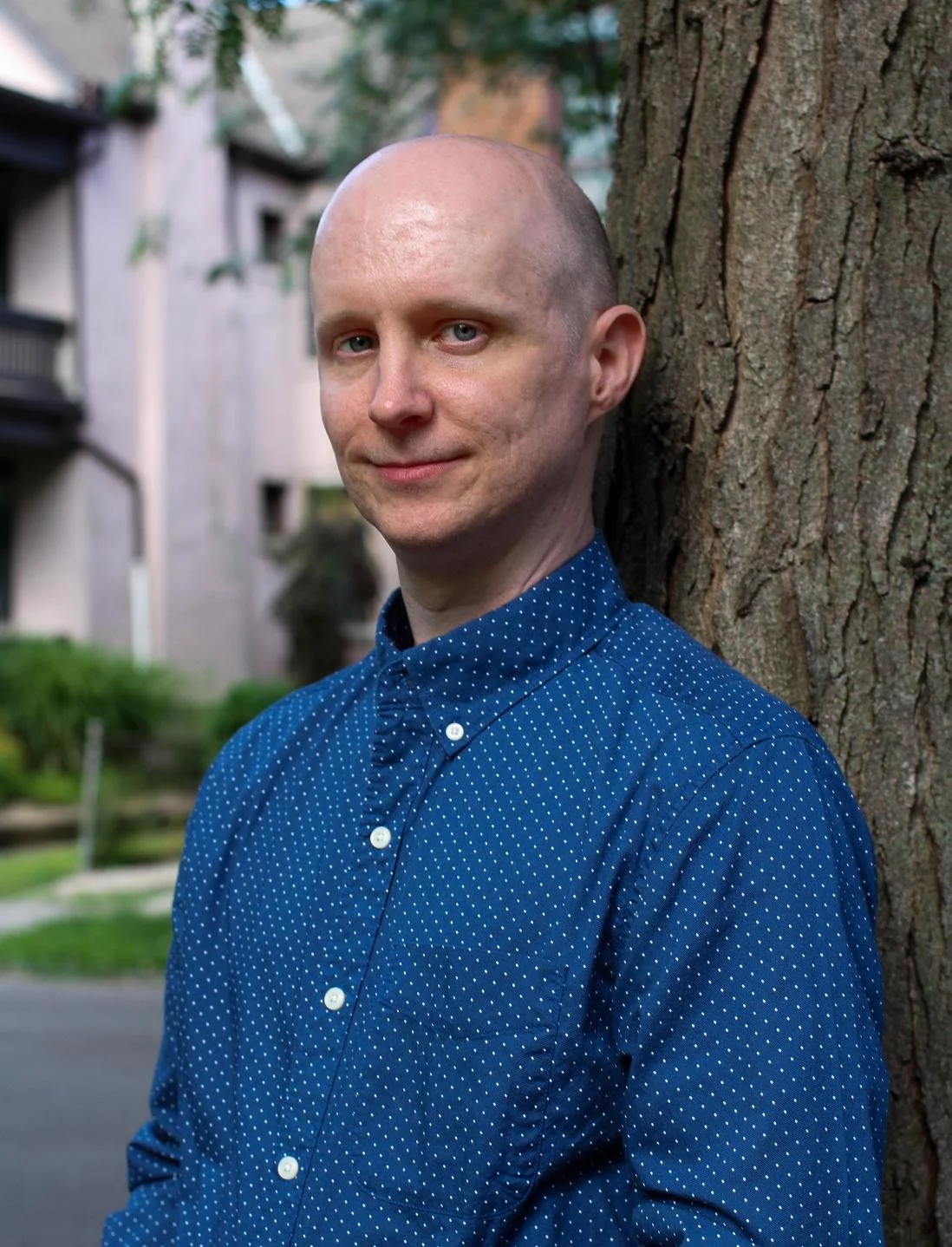
I am a Licensed Professional Clinical Counselor offering virtual therapy across Ohio. Before counseling, I spent more than fifteen years in engineering and science, working in particle accelerators, gene therapy, and pharmaceuticals. I also started businesses, earned an MBA, and invested in real estate.
That background shapes how I work. I am used to taking complex ideas apart and explaining them in everyday language. In sessions, that means helping you look at your situation from new angles, make connections, and find the small shift in thinking that starts real progress.
Clients often describe me as calm. I do not react with shock to what someone shares, which leaves room for understanding and acceptance. They also notice my memory and the connections I draw between things they have said.
I tend to work well with people who think things through. Many think first and feel second, though not always. What matters most is a willingness to look at things from a different angle and reconsider what has happened. I am good at generating scenarios and possibilities, which helps when someone feels stuck in one way of seeing things.
My path to this work was not a straight line. It ran through science, business, and a turning point of my own before it led here. The full story is below.
Clinical Insight
Rooted In Real World Experience
Where It Started
My early career was hands on science, making highly specialized chemicals in very technical fields. My strength was analysis. I looked for ways to make systems faster and more efficient, and I usually found them.
Those fields reward precision and accuracy, and those skills came naturally to me. That turned out to be the problem. I would master a role fairly quickly and then find myself wondering what came next. Some of my coworkers found the work challenging, and that challenge drove them. For those of us who didn't, the work became routine.
I also noticed what organizations tended to prioritize. Many goals mattered to the balance sheet and stakeholders, but didn't seem to matter to the work itself. Over time, I started to wonder what kind of work would matter to me.
The Turning Point
After working through my own struggles, my priorities changed. I was good at my career, but it was not fulfilling. I reached a point where fulfillment mattered more than a paycheck. Therapy had changed my life. I realized that helping even one person change theirs would mean I had lived a meaningful life.
I also saw what had been missing in my earlier work. Projects often took five to ten years to reach the world. The daily work rarely showed whether I was making a difference.
So I did a values and career inventory. A few paths fit. Mental health work stood out because it can never be mastered. I could spend a lifetime with one person and still not fully know their world. Every client brings something new to learn and connect. The research keeps growing too. I could not think of another career like that.
Changing Identities
The hardest part was the shift in identity. Going from engineer and scientist to counselor was a big change for some people in my life, and they had opinions about it. I had been through this before. When I became an entrepreneur in my early twenties, many people questioned whether I knew what I was doing. That experience made this change easier. I knew I could change identities and come out the other side still myself.
Accepting the risk was simple. If I could help one person, the change would be worth it.
Learning the Work
Graduate school was structured. It taught theories and techniques as if there were one correct way to do therapy. Clinical work is different. There is a wrong way to do therapy, but there is no single right way. Each clinician brings their own style. Each client's path looks different, even when the goals are similar. I can plan an approach for a session and be somewhere else entirely within ten minutes. Flexibility matters more than any plan.
My love of reading and research carried over. I enjoy going to the source, reading the full study, and looking for its assumptions and limits. A headline or an abstract is not the same as understanding what a study can and cannot tell us.
Some things had to be unlearned. My earlier career ran on systems and metrics. Therapy has no quarterly review. A client's progress belongs to the client. So do their setbacks. That meant learning to set my own goals for growth as a clinician. It also meant letting go of the idea that there is one right way to treat mental health. The right way starts with the person. That is a big part of what keeps the work interesting.
Why Private Practice
A solo practice lets me use everything I enjoy. I love clinical work. I also like the business side, including marketing and accounting, even the tedious parts. Wearing different hats keeps me engaged.
It also brings freedom. Clients seek me out because the fit makes sense, rather than being assigned through an agency. I can focus on the areas where I am most helpful while still working with a range of people and concerns. I set my own schedule, choose my own continuing education, and do not work toward quotas. Working virtually suits my needs as well.
How I Work
People get stuck for many reasons, some internal and some external, so sessions are never fixed. They adjust to the person and to what they need. I am also a literal person, and I avoid definitive statements. You will hear me say "almost always" or "almost never," because very little in life is absolute.
I do not believe there is one right way to live a life. Whatever you are facing, it is your life to lead, and I do not push toward a particular outcome. Your outcomes should be yours. That is also why I avoid giving advice. It is not my role, and I pay close attention to the moment when what I am saying starts to sound like advice instead of therapy.
Why Therapy Matters to Me
I believe therapy is transformative. I treat it as sacred. It is unlike any other experience, and it cannot happen with a friend or a loved one. There are few other times when someone will sit with you for an hour and think only about you. They are not waiting for their turn to talk, wondering how the conversation affects them, or thinking about what to make for dinner. For that hour, my attention is on you. I only know the people and situations in your life through how you describe them. Your reality is the one we work with.
The Common Thread
Outside of sessions, I read mostly nonfiction, especially human history, biology, and psychology. I ride my bike a lot. When I need to recharge, I head outside. Nature is my space.
Looking back, every career and interest I have had comes down to learning how something works. Engineering taught me how matter behaves, how physical systems work, and how math can describe both. Business taught me how organizations are structured, how they grow, and how leadership shapes them. Counseling is about how individual people work. That one can never be finished, because every person is different.
Professional Background and Credentials
B.S. Chemical and Biomolecular Engineering - Ohio State University
15+ years experience in particle accelerators, pharmaceuticals, gene therapy, and research and development.
Master of Business Administration - Capital University
10+ years experience in leadership, small business ownership, and real estate investment & asset management.
M.A. Clinical Mental Health Counseling - Capital University
3+ years of experience with a clinical focus on thinking patterns and behaviors. Offering compassionate, nonjudgmental care.
Begin Your Confidential Consultation
Ready to take the first step? Submit the form to schedule a free 15-minute consultation.